Disposable Vape Waste and Delivery Habits in Singapore
There is a used device sitting in your drawer right now. Maybe two. Maybe a small pile of them, each one flat, spent, and quietly waiting for a decision you have not made yet. You did not plan to collect them. They simply accumulated, the way delivery boxes and takeaway containers do, because the moment they stopped working there was no obvious next step. That drawer is the real starting point for any honest conversation about disposable vape waste in Singapore, and it is also where this article begins.
Anyone who orders a Singapore lana vape online knows how frictionless the front end of the experience has become. A few taps, a short wait, and a sealed package arrives at your door. The back end of that experience, the part that happens after the last puff, gets far less attention. This piece is not here to lecture you about it. It is here to treat it as a practical household problem with practical answers, because that is what it actually is.
The Quiet Pile-Up: What Disposable Vape Waste Actually Looks Like
Disposable devices are engineered to be convenient, and convenience has a physical cost. A typical unit combines a plastic outer shell, an internal battery, a heating element, wiring, and residual liquid. When the device reaches the end of its life, all of those materials arrive at the same destination at the same time, fused together in a form that was never designed to be taken apart. That is the core of the waste problem: not that any single device is enormous, but that the components are difficult to separate and the volume is steady.
In a dense city where online ordering is normal, the pattern compounds. Delivery makes it easy to reorder before you have thought about what to do with the last one. The result is a slow accumulation that most users notice only when a drawer stops closing properly. The lana vape sg market, like any convenience-driven category, benefits from customers who think one step further than the checkout page.
Batteries deserve particular attention here. A lithium cell that is fine sitting on a shelf becomes a different kind of object once it is crushed, punctured, or exposed to heat in a mixed waste stream. That is a safety issue as much as an environmental one, and it is the main reason disposable devices should never simply be tossed into a general rubbish bin without a thought.
Buyer Habits That Reduce Waste Without Reducing Convenience
The good news is that most of the meaningful changes are small and happen before the device is even empty. The first is simply paying attention to quantity. Buying in a way that matches your actual usage, rather than stocking up out of habit, reduces the number of half-finished devices that end up abandoned. If you use one device a week, ordering five at once rarely saves anything except a delivery trip, and it often leads to units sitting around past their best.
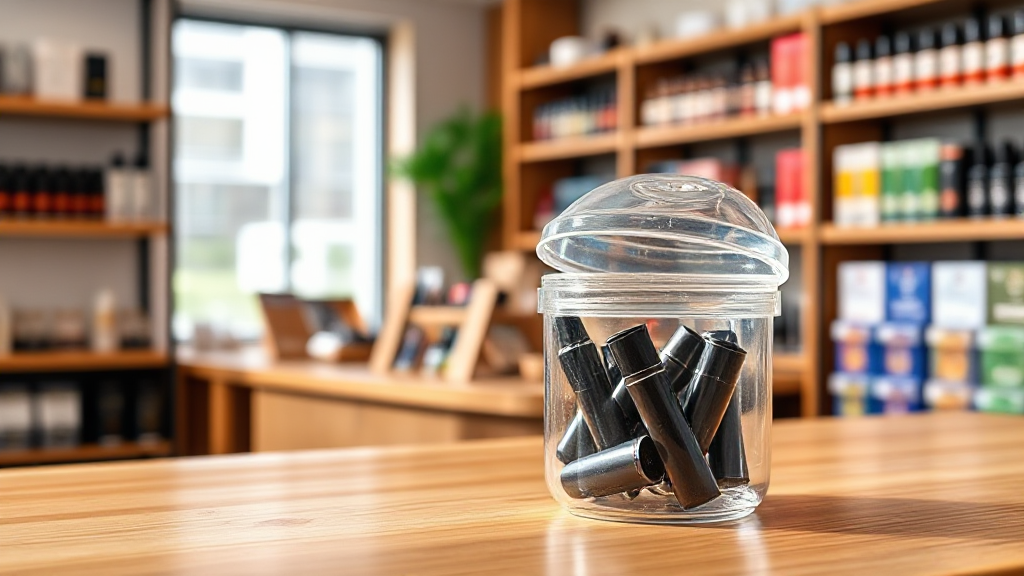
The second habit is keeping a dedicated container for spent devices instead of scattering them across drawers and bags. A single lidded box near where you normally vape turns an invisible problem into a visible one, and a visible problem is one you will actually deal with. It also keeps batteries from being crushed among general household waste, which matters for safety.
The third habit is choosing a supplier who treats the transaction as more than a one-way shipment. A service that runs on local stock and same-day fulfilment, such as Lana vape same day delivery, tends to generate less of the over-ordering behaviour that comes from long waits and uncertainty. When you know a replacement is genuinely close by, there is less reason to hoard.
Finally, there is the habit of asking questions. If you are ordering regularly, it is reasonable to ask how a retailer handles packaging, whether they consolidate shipments, and whether they offer any guidance on end-of-life disposal. Retailers that take Singapore vape delivery seriously as a service are usually the same ones willing to answer those questions directly.
Disposal Options and What to Do With a Spent Device
Once a device is genuinely finished, the goal is to keep its battery out of the general waste stream and, where possible, to route the rest of it toward proper handling. The practical steps are not complicated, but they do require a little intention.
Start by confirming the device is truly empty and, if it has a visible charge indicator or any residual function, do not attempt to recharge or disassemble a disposable unit. These are sealed products, and opening one risks damaging the cell. Instead, store it in a cool, dry place inside your collection container until you are ready to dispose of it properly.
For the actual handover, the most reliable route is to treat the device like small electronic waste rather than household rubbish. Many communities and building management offices in Singapore maintain e-waste collection points, and these are designed to accept items containing batteries. If your building has one, that is often the simplest option. If not, a nearby e-waste drop-off point serves the same purpose.
If you are unsure where to take a device, ask the retailer you buy from. A shop that handles Vape delivery sg on a daily basis will have a clearer view of what local customers typically do and can point you toward a sensible option. It is a small question, but it is the kind that shifts a category from thoughtless to responsible over time.
It also helps to reduce waste at the source where you can. Ordering from a supplier with ready local stock, like an Sg vape shop delivery service, means fewer long-haul shipments and less packaging per order when you consolidate sensibly. None of this is dramatic. It is just the difference between a drawer full of loose devices and a container you actually empty on a schedule.
One more point worth being honest about: no single buyer is going to solve disposable vape waste alone, and pretending otherwise is unhelpful. What individual users can do is stop treating the spent device as invisible. Once it has a place to go and a routine attached to it, the problem shrinks to something manageable, and the pressure on retailers and policymakers to improve the system grows alongside it.
A Short Closing Note on Responsibility
The device in your drawer is not a moral failing. It is an unfinished decision. The convenience of ordering a vape and having it arrive the same day is real and worth keeping, but it works better when the last step of the process is as deliberate as the first. Keep a container. Empty it properly. Ask your supplier where spent devices should go. Do that, and the drawer stops being a quiet pile of guilt and becomes just another routine you handle without thinking. That is a reasonable standard for anyone who enjoys the convenience of delivery in Singapore, and it is one that costs almost nothing to meet.